……………………
…………………….
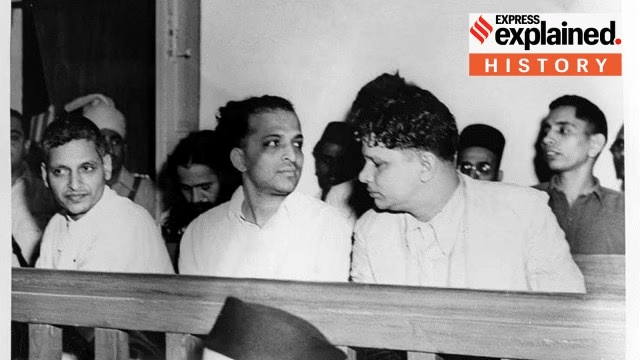
The trial of persons accused of participation and
complicity in Mahatma Gandhi’s assassination,
on May 27, 1948. Left to right: Nathuram Vinayak Godse, Narayan Dattatraya Apte and Vishnu Ramkrishna Karkar.
……………………………………………………………………………………………………………………………..
காந்திஜி கொலை செய்யப்பட்ட விதம் அனைவருக்கும்
தெரிந்திருக்கும்…..
ஆனால், அதன் பின்னணி, அந்த வழக்கு நடந்த விதம் போன்ற
விவரங்கள் இக்கால இளைஞர்களுக்கு விவரமாக தெரிந்திருக்க
வாய்ப்பில்லை.
கடந்த காந்திஜி நினைவு தினத்தன்று, இந்தியன் எக்ஸ்பிரஸ் ஆங்கில
நாளேடு இது குறித்த விவரங்கள் அடங்கிய ஒரு செய்திக் கட்டுரையை
வெளியிட்டிருந்தது….
விமரிசனம் தளத்தின் இளைய வாசக நண்பர்களுக்காக,
அதை கீழே பதிப்பிக்கிறேன்….
………………….
On January 30, 1948, as Mahatma Gandhi was walking
towards the prayer mandap at Birla House in Delhi,
35-year-old Nathuram Godse came before him and
pulled out a pistol from his pocket.
He fired three shots from point-blank range that hit
Gandhi in the chest, stomach, and groin.
Within 15 minutes, the Father of the Nation was dead.
Godse was apprehended by military personnel who were
at the spot, and his pistol was snatched away. The
assassin was beaten by the crowd before police took him
into custody. Subsequently, he was lodged at a police
station on Tughlaq Road, where an FIR was registered.
Godse’s trial –
The trial began in May 1948 at a special court set up
in Delhi’s Red Fort. The monument had earlier been the
venue for the trials of the last Mughal emperor,
Bahadur Shah Zafar who was deported to Burma and,
around nine decades later, of the members of the
Indian National Army.
The trial took place before Special Judge Atma Charan,
a senior member of the judicial branch of the Indian
Civil Service. The prosecution was led by CK Daphtary,
then Advocate General of Bombay, who later became
Solicitor General of India, and then the Attorney
General for India.
Godse along with other accused, including Narayan Apte
and Vinayak Savarkar, were allowed to take the help of
counsel of their choice.
In his book, ‘Why They Killed Gandhi: Unmasking the
Ideology and the Conspiracy’, Ashok Kumar Pandey wrote,
“the law took its course wherein he (Godse) was supplied
with legal aid at government expense, and most of his
demands during his stay in jail were fulfilled.”
On the second day of the trial, Godse admitted that
while in detention, everyone had been civil to him,
Pandey wrote.
What happened at the trial of Nathuram Godse, the man
who killed Gandhi?
Between June and November 1948, the special court
heard 149 witnesses. The prosecution brought on record
404 documentary exhibits and 80 material exhibits.
According to Justice G D Khosla, who was part of the
three-judge Bench at Punjab High Court that heard
the appeals of Godse and others, during the hearing,
the most important witness for the prosecution was
Digambar Badge.
“He was alleged to be one of the conspirators and
an active participant in the murder plan”, Justice
Khosla wrote in his book, ‘The Murder of the Mahatma’.
After his arrest, Badge admitted his guilt and agreed
to incriminate his accomplices, Justice Khosla wrote.
The judgment was pronounced on February 10, 1949.
Judge Atma Charan convicted Godse, Apte, and five others
of the crime. Both Godse and Apte were sentenced
to death. Savarkar was acquitted.
The judge also announced that the convicts could file
an appeal against the order. Four days later, all of
them filed their appeals in the Punjab High Court,
which was then known as the East Punjab High Court,
and located in Shimla.
Interestingly, instead of challenging the conviction,
Godse’s appeal objected to the court’s finding that
he wasn’t the only one involved in Gandhi’s murder
and there was a larger conspiracy to kill him.
Appeal in High Court –
- the appeals were heard by a Bench that including
Justice Khosla, Justice A N Bhandari, and Justice
Achhru Ram. During the proceedings, Godse refused
to be represented by a lawyer and asked to be allowed
to argue his appeal himself. The court accepted
his request.
Justice Khosla wrote that while speaking in the court,
the assassin didn’t repent his crime and used the
opportunity to “exhibit himself as a fearless patriot
and a passionate protagonist of Hindu ideology”.
“He had remained completely unrepentant of his
atrocious crime, and whether out of a deep conviction
in his beliefs or merely in order to make a last
public apology, he had sought this opportunity of
displaying his talents before he dissolved into
oblivion,” Justice Khosla wrote.
The Bench gave its verdict on June 21, 1949.
It confirmed the findings and sentences of the lower
court except in the cases of Dattatraya Parchure and
Shankar Kistayya, who were acquitted of all charges.
Final appeals –
The convicts also filed a petition for special leave
to appeal to the Privy Council, which was the highest
court in India during British rule, and was replaced
by the Supreme Court in 1950. However, the petition
was rejected.
The hanging of Godse and Apte became inevitable after
the Governor-General of India rejected their mercy
petitions. Godse’s mercy petition was filed by his
parents, not him. Both men were hanged on
November 15, 1949, in Ambala jail.
…………………………………………………………………………..
https://indianexpress.com/article/explained/explained-history/nathuram-godse-trial-gandhi-death-9134078/
……………………………………………………


 வி ம ரி ச ன ம் - காவிரிமைந்தன்
கொள்ளைக் கூட்டமான ஸ்டாலின் குடும்பத்துக்கு தமிழகத்தைப் பற்றிப் பேச என்ன உரிமை இருக்கிறது? தன் குடும்பம், தன் மருமகன் குடும்பம், தன் மகன் குடும்பம் என்று எப்படிக்…